You have a big idea… Now what?
How to turn your vision into reality.
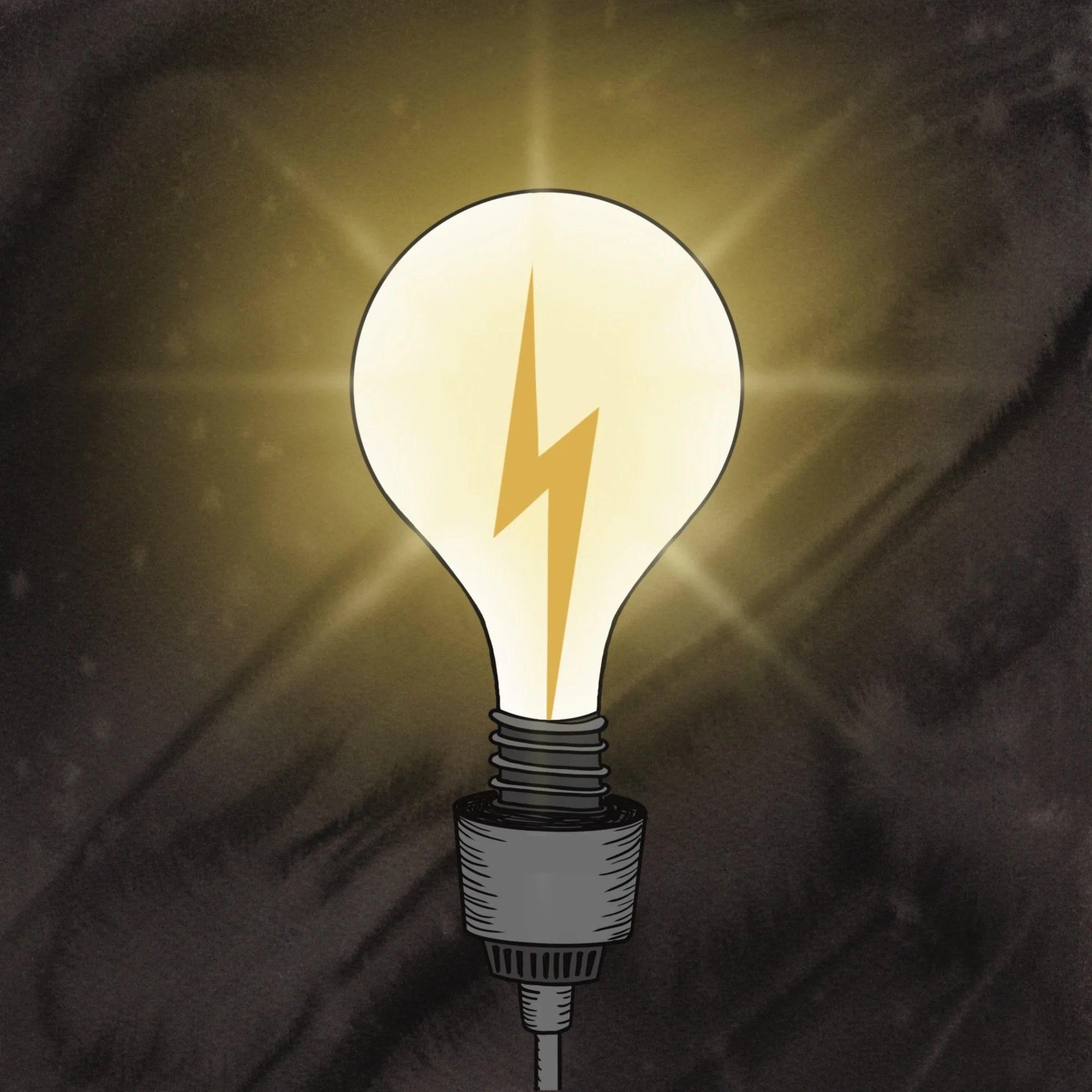
What’s your big idea?
Illustration by Molly Chidsey, ink and watercolor painting layered with hand-drawn illustration.
That “good idea” feeling.
You know that feeling you get in your body when a really good idea comes to you? For me, time seems to stand still, and I feel a sense of calm while the idea floats through my mind. The idea is often gauzy, taking a nebulous form that is hard to identify with words. After the moment is over, my mind and body go back to whatever I was doing before the idea struck. If I don’t acknowledge it by writing it down or sketching it, the idea can drift away.
There are countless stories and fables about regular people changing the world for the better. What makes them different? They had a big idea, then they ran with it.*
Having an idea isn’t the same as knowing how to implement it. As a project manager for most of my career, I have helped countless people and their ideas become reality. In this post, I am sharing a few of my tricks for helping you go from that wisp of an idea to a solid pathway that brings it to life.
The five steps between your vision and reality.
1) Get clear on your project values and vision.
Spend some time envisioning the idea as if it has become reality. How does it feel? How does it align with what you personally care about? I believe that it’s important to tap into your imagination at this stage. In this step, I coach my clients to use creative practices like sketching, collage, or walking meditation to start to put images to their idea.
Next, you need to identify what drives you and your work? What do you really care about? How does this relate to your idea?
2) Make a list of your needs and wants.
When you have a clear vision in your mind about what your idea looks and feels like, it’s time to figure out what form it takes. To do that, you need to identify what you (and your idea) need to be successful at bringing it into reality.
Traditional project management defines a need as something that must be included in the project or the project will fail. I add to this definition that which must be included in the project to keep it aligned with your values and vision for the idea (see step 1).
Make a list of what your idea needs to succeed, then filter it by your vision and values. This step can produce surprising results. This is a good time to practice curiosity.
3. Brainstorm a list of tasks for the project.
Now that you have defined your idea, your values and vision for it, as well as your needs and wants, it’s time to dive in to the details.
What will you need to do to implement this vision? Brainstorm all the tasks that need to happen, all while focusing on your vision. Since this is a brainstorm, no ideas are bad ideas at this point. You can organize, edit, and prioritize this list in the next step. For now, just get them all out of your head.
4) Screen your list of tasks through your vision, values, and needs.
No, you do not have to do everything on the list you brainstormed in step 3.
Whew!
Use your values and needs from your earlier work to sort your brainstormed tasks. Those that support both your values and needs, put into a “keep” pile. Tasks that do not support all of your values and do not support a need you identified before, put into a “toss” pile.
This step can be a real challenge, since it brings up feelings that we need to do everything we can to bring our idea into the world. This simply is not true, and can lead to burnout.
5) Put the tasks in order, then on your calendar.
When you are done with the prioritization step, it’s time to put the remaining tasks in a sequence that makes sense to you. I like to group similar tasks together into categories that will become the project phases. If you follow the Bullet Journal Method, these phases are called sprints.
You’ll also want to create a loose timeline for these phases and tasks. Be generous. My experience is that the time I estimate a task to take is usually 3x longer in reality. This is ok.
Make space on your calendar to do this work, whatever that looks like for you. Make a plan for accountability and encouragement as you implement your plan: a buddy system, coworking space, or body-doubling can help you feel less isolated when you are working on a project.
Need help? I am here for you.
I coach changemakers, leaders, writers, researchers, funders, and other purpose-driven professionals who are developing ideas, projects, or new directions in their work. Together, we clarify the vision, bring structure to complex ideas, and identify practical paths forward.
The world needs your vision—now more than ever. Let’s work together to transform your spark of an idea into a strategy that works.
What is your big idea? I would love to hear it!
Note: It’s critical to acknowledge the roles that power and privilege play in one’s ability to bring their vision to reality. Systems of oppression are strong, and they exert a force against those who work for justice, equity, and love. As a coach, I tap into my experiences as a facilitator, program manager, team lead, and organizer for environmental and social justice throughout my career.
